
Last updated: February 18, 2026
Niger is a large, landlocked country in the Sahel region of West Africa. Since attaining independence from France in 1960, the country has grappled with severe challenges, including authoritarian military-style rule, instability, conflict and poverty. Despite being rich in natural resources, it is one of poorest countries in the world, with half of the population earning less than US$2 a day. Niger has faced a growing insurgency from extremist groups, including Islamic State Sahel Province (ISSP), Islamic State West Africa Province (ISWAP) and JNIM.
Political profile: Increasing Isolation Under Tchiani
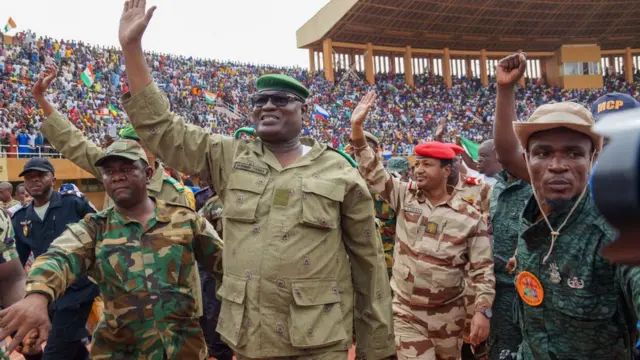
Niger has been plagued by military coups throughout its history. The first democratic transition of power occurred as recent as 2021, following a period of relative stability. In 2023, incumbent leader Mohamed Bazoum was overthrown by General Abdourahamane Tchiani, who remains the country’s junta leader as of 2026. Shortly after the coup, Niger, alongside Burkina Faso and Mali, announced their withdrawal from ECOWAS and formed the Alliance of Sahel States (AES). The junta has cracked down on political activists, independent media and civil-society organizations, many of which have had to cease their operations. The junta appears to prioritise the preservation of its rule over effectively addressing the insurgency.
Security: An Unsustainable Strategy For A Growing Insurgency
Since 2015, Niger has faced a growing insurgency that has destabilised the country and resulted in the death of thousands and displacement of tens of thousands of people. Currently, terrorist groups are mainly active in two parts of the country. In the Southwest, JNIM and ISSP have increased their presence in the Liptako-Gourma tri-border with Mali and Burkina Faso. The Tillabéri region in Western Niger has been a major hotspot for terrorist attacks in recent years, mainly by ISSP. In recent years, the IS-affiliated militants have increasingly encroached upon the capital of Niamey. On January 29, ISSP conducted a coordinated attack on the city’s airport, demonstrating its increased reach and capabilities. JNIM is mainly active in the Park W area bordering Benin and Burkina Faso, from which it has launched attacks on targets in Southern Niger.
In the Southeast of the country, ISWAP has been increasingly active, specifically in the Diffa region bordering Nigeria and Chad. An offshoot of Boko Haram, ISWAP has increasingly replaced the Nigerian terrorist group as the most dominant in the Lake Chad Basin. Originally, ISWAP and Boko Haram operate in northeastern Nigeria, however they have both carried out kidnappings and attacks across the border in southeastern Niger. Another emerging threat in Niger’s south is the Nigerian armed group Lakuwara, which has been terrorising Nigeria’s northwestern Sokoto state and has staged cross-border attacks into Niger.
The 2023 military takeover fundamentally altered Niger’s counterinsurgency approach. The previous government of Mohamed Bazoum focused on targeted raids and special operations, in addition to deradicalization programs. The junta has changed course, adopting a more repressive and violent approach that has increased civilian casualties. Such a strategy is less sustainable long-term as it risks pushing people towards organizations like JNIM and ISWAP. As the insurgency continues to expand, the junta’s strategy to deal with the threat remains unsustainable in the long-term.