
Ghana’s Framework on Preventing and Countering Violent Extremism (P/CVE)
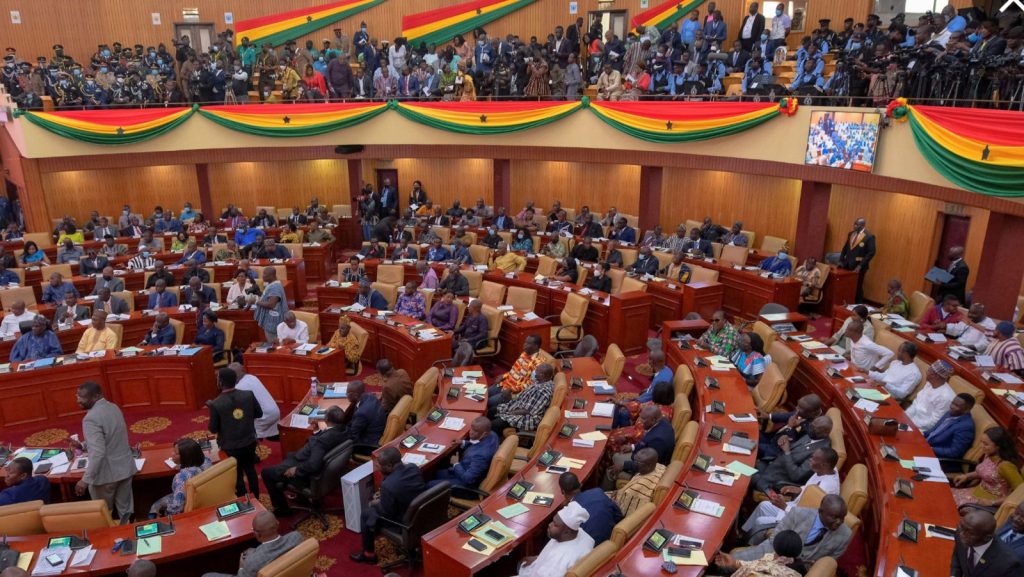
Ghana’s Parliament, Source: Media Foundation for West Africa
By: Hannah Gray, Visiting Researcher
Over the past decade, violent extremist groups have transformed the security landscape of West Africa. Once concentrated in the Sahel, organizations linked to al-Qaeda and the Islamic State have steadily expanded southward, exploiting weak governance, porous borders, and local grievances to establish new footholds.
Amid this growing insecurity, Ghana stands out. It is the only coastal state along the Gulf of Guinea that has not experienced a terrorist attack, despite sharing borders with the countries that are the most affected by violent extremism in the world. Rather than waiting for an attack to occur, Ghana has invested in one of the region’s more comprehensive Preventing and Countering Violent Extremism (P/CVE) strategies, combining security measures with efforts to address the conditions that make communities vulnerable to radicalization.
However, maintaining security is far from guaranteed. This explainer outlines Ghana’s P/CVE framework, how it operates, the challenges it faces, and why its ongoing reform matters for the future of regional security.
What is P/CVE?
PVE, or Preventing Violent Extremism, refers to policies and initiatives designed to stop individuals or communities from becoming vulnerable to extremist ideologies in the first place. Rather than focusing solely on security responses, PVE seeks to address the underlying conditions that can contribute to radicalization, including social exclusion, poor governance, economic marginalization, and the spread of extremist narratives. This often involves community engagement and education programs, as well as initiatives to increase youth empowerment initiatives and form partnerships between religious and traditional leaders.
Countering Violent Extremism (CVE), by contrast, focuses on disrupting existing extremist activity. It includes measures to detect and prevent planned attacks, dismantle recruitment networks, strengthen intelligence gathering, improve border security, and support law enforcement and judicial responses to terrorist threats. Together, PVE and CVE form a comprehensive approach that seeks not only to respond to terrorism, but also to reduce the conditions that allow violent extremism to emerge in the first place.
In Ghana, the 2019 National Framework for Preventing and Countering Violent Extremism and Terrorism (NAFPCVET) seeks to formalize these approaches. The implementation of the framework has been led by the Counter-Terrorism Fusion Centre and involves coordination between various ministries, institutions, and intelligence services. It is also supported by a wide range of complementary legislation, including the Anti-Money Laundering Act 2008 and the Anti-Terrorism Regulations 2012.
Since late 2024, the framework has been under review with support from partners such as the UNDP, the IOM, Australia, the UK, the Netherlands and Germany to help ensure it addresses evolving threats and aligns with international standards.
NAFPCVET Strategies
Ghana’s NAFPCVET is built around four pillars: Prevent, Pre-Empt, Protect, and Respond. Rather than relying solely on military action, the framework combines intelligence-led security operations with efforts to reduce the drivers of radicalization.
The Prevent pillar focuses on reducing vulnerability to extremist recruitment through community engagement, education campaigns, youth empowerment projects, and partnerships with religious and traditional leaders. The Pre-Empt pillar strengthens intelligence gathering, border surveillance, and early warning systems to identify risks before attacks occur. Protect seeks to improve the security of borders, critical infrastructure, and vulnerable communities through better-trained security services and stronger inter-agency coordination. Finally, Respond establishes procedures for crisis management, emergency response, investigations, and post-incident recovery should an attack occur.
A key feature of Ghana’s approach is its emphasis on local communities as the first line of defense. Programs such as the “See Something, Say Something” campaign encourage citizens to report suspicious behavior through security hotlines and local authorities, while district-level sensitization programs train community leaders to identify early signs of radicalization. Organizations such as WACCE support this approach by working with state institutions and communities to strengthen local resilience to violent extremism. These measures have contributed to arrests of suspected extremists, the disruption of recruitment networks, and the identification of suspected sleeper cells before attacks could be carried out.
Main Challenges
Despite Ghana’s progress, several weaknesses continue to limit the framework’s effectiveness. Critics argue that implementation still has a securitization bias, with greater investment in military and policing capabilities than in addressing underlying drivers of extremism such as unemployment, marginalization, and weak local governance. Experiences in neighboring Mali and Burkina Faso have shown that security operations alone are unlikely to contain extremist movements over the long term.
Operational challenges also remain. Information sharing between ministries, intelligence agencies, district assemblies, and civil society organizations is often fragmented, slowing decision-making and reducing the effectiveness of early warning systems. Many community resilience projects also depend heavily on international donor funding, raising concerns about their long-term sustainability once external support declines.
Regional cooperation has also weakened following the decline of the Accra Initiative. Established in 2017 by Benin, Burkina Faso, Côte d’Ivoire, Ghana and Togo (later joined by Mali and Niger), the Initiative coordinated intelligence sharing, joint border patrols and cross-border military operations against extremist groups moving south from the Sahel. However, political instability, military coups in several member states, deteriorating diplomatic relations with ECOWAS, and limited institutional funding significantly reduced its effectiveness. By 2024, cooperation had largely stalled, leaving Ghana with fewer formal mechanisms for coordinating security operations with its northern neighbours.
Why It Matters
Ghana is a comparatively safe state in a region where many of its neighbors are scarred by violent extremist events. It remains one of the only West African states that hasn’t experienced a terrorist attack. However, at a recent session focussed on reforming Ghana’s framework, Miss Shaima Hussein of the UNDP pointed out that 10 years ago, Burkina Faso also had no records of deaths related to terrorism, but now it is top of the index. Security conditions can change drastically in a decade and require clear, strong strategies to maintain peace and stability.
Ghana is in a unique position in the region. While most of its’ neighbors focus heavily on CVE strategy out of necessity, Ghana has the chance to invest in PVE as well. Working alongside Ghana’s Counter-Terrorism Fusion Centre and other national and regional partners, WACCE emphasizes the importance of approaches that align with Ghana’s NAFPCVET to combine security action with locally driven prevention initiatives. By addressing both immediate threats and the underlying conditions that enable violent extremism, Ghana has the chance to maintain its security and provide an example of success in the region.
Key Takeaways
Ghana produced the National Framework for Preventing and Countering Violent Extremism and Terrorism in 2019. This involved coordination between different state authorities and was built on the 4 pillars of Prevent, Pre-Empt, Protect, and Respond. Ghana’s framework has helped to legitimize and elevate the work of organizations like WACCE and has played a role in keeping the country safe in a region facing unprecedented extremist expansion. However, its future effectiveness will depend on whether current operational gaps are addressed.
If challenges around coordination, sustainable funding, intelligence sharing, and community engagement persist, the framework risks falling short of its potential. Ghana must also avoid relying too heavily on security-led responses alone. The experiences of Mali and Burkina Faso warn that a NAFPCVET overly focused on military measures, without addressing governance challenges and local grievances, is unlikely to provide lasting stability.